I worked across SEO and website structure. The documented scope included on-page SEO, search intent mapping, internal linking, review page restructuring, parent location and child property page alignment, image compression and WebP conversion, metadata preparation, and technical SEO hygiene.
CASE STUDYVisibilityConversionOperations
Building a Cleaner SEO System for The Westside Group
A documented look at how I worked across search intent, location pages, property pages, internal linking, images, review content, and technical SEO on an established Austin apartment website.

ClientThe Westside Group
IndustryApartment Rentals
LocationAustin, Texas
FocusSEO + Page Structure
PlatformWordPress
Core WorkOn-page, linking, images, technical SEO
Section: Overview
Project Background
Overview & Context
The Westside Group is an established Austin apartment rental and property management company operating across central Austin, including West Campus, North Campus, Hyde Park, Clarksville, and West Downtown. The company manages 11 residential communities primarily serving University of Texas students and central Austin residents.
Core Situation
When inspecting the website, it was clear that the domain contained several distinct types of pages that were competing for the same organic keyword themes.
The primary challenge was not simply adding more keywords to existing paragraphs. The website required clear structural separation between page roles so that broad Austin and neighborhood searches did not conflict with property-specific and review-specific intent.
Key Page Tiers on the Website
- Homepage: Brand umbrella & central Austin entry point
- Parent Location Pages: Neighborhood sub-market hubs
- Individual Property Pages: Specific apartment communities
- Resident Review Pages: Testimonials & star ratings
- Blog Posts: Student renter guides & local tips
- Utility Pages: Application handoffs & contact paths
Intent Separation
The Main Problem Was Page Intent
In multi-property real estate websites, different visitors arrive with fundamentally different search goals. If every page attempts to rank for every variation of the same city or neighborhood keyword, the search engine cannot determine which page should be returned for a specific query.
Prior to this work, broad Austin phrases, neighborhood mentions, building details, and review terms frequently overlapped across page templates. The solution was to re-anchor each tier around its natural search role.
"Clear separation between page roles helps ensure that broad neighborhood terms remain on location hubs, while individual apartment communities focus on property-level intent."
Core Architectural PrincipleHomepageBroad Austin Rental Intent
Serves first-time visitors seeking central Austin apartments. Connects directly to parent neighborhoods and primary brand credentials.
Location PagesNeighborhood-Level Intent
Targets area searches such as West Campus or Clarksville apartments. Outlines neighborhood lifestyle and links to child units.
Property PagesBuilding-Name Intent
Focuses on specific building queries like Diplomat or Envoy apartments, floor plans, physical amenities, and immediate inquiries.
Review PagesResident-Review Intent
Targets prospective renters researching company reputation, star ratings, and resident feedback without rental keyword overlap.
Intent Hierarchy
Page Role & Search Intent Mapping
This structural mapping guided every on-page heading, meta description, and internal link connection across the website.
| Page Type | Role | Main Search Intent |
|---|---|---|
| Homepage | Brand + broad hub | Austin apartment rentals |
| Location pages | Neighborhood hub | Area-level searches (West Campus, Clarksville) |
| Property pages | Building-specific listing | Property-name intent (Diplomat, Envoy floor plans) |
| Review pages | Trust & reputation support | Resident-review intent & certified ratings |
| Blog posts | Informational support | Renter questions & student relocation guides |
System Architecture
Website Structure & Navigation Flow
How page tiers were structured so informational paths connect into commercial pages without creating topical conflict.
Tier 01 // Broad Search
Homepage: Austin Apartment Rentals
Central Austin umbrella intent & brand navigation
Tier 02 // Neighborhood Hubs
West Downtown / Clarksville
2 communities: 6th St West, Waterston
West Campus (UT Austin)
6 communities: Diplomat, Envoy, etc.
North University / Hyde Park
3 communities: Hyde Park Court, etc.
Tier 03 // 11 Individual Apartment Properties
Montage · Rio Grande Square · Barranca Square · Envoy West Campus · West Campus Flats · Diplomat West Campus · Hyde Park Court · Monticello Studios · Melroy North University · 6th Street West · Waterston Studios
Property-name keywords + floor plan specs + photo galleriesVacancy InquiriesOn-site unit interest
Notifications PathWaitlist & vacancy alerts
Application HandoffOperational leasing portal
Informational Blog Content (14 Posts)
Addresses UT Austin off-campus tips and renter questions. Links contextual anchors directly into relevant property pages.
Resident Review Pages (Parallel Track)
Kept isolated to reputation and resident feedback queries. Does not compete with transactional rental keywords.
Implementation Scope
What I Worked On
The project involved a structured set of technical and on-page tasks executed on staging. Rather than treating SEO as isolated copy adjustments, each change supported the broader page architecture. Expand each workstream below to review specific deliverables:
- •Separated homepage, location hubs, child property pages, review pages, and blog post roles.
- •Mapped specific query intent to appropriate page tiers to eliminate internal competition.
- •Reduced keyword overlap between parent neighborhood hubs and individual building pages.
- •Preserved established URL slugs to protect historical ranking signals and avoid 301 redirection chains.
Case Evidence
Before and What Was Changed
A detailed review of specific page types from the project records, illustrating the initial state and the structural adjustments introduced. Click on any screenshot to inspect it at full resolution.
Page Role: Parent Location Hub
Example 01Clarksville / West Downtown
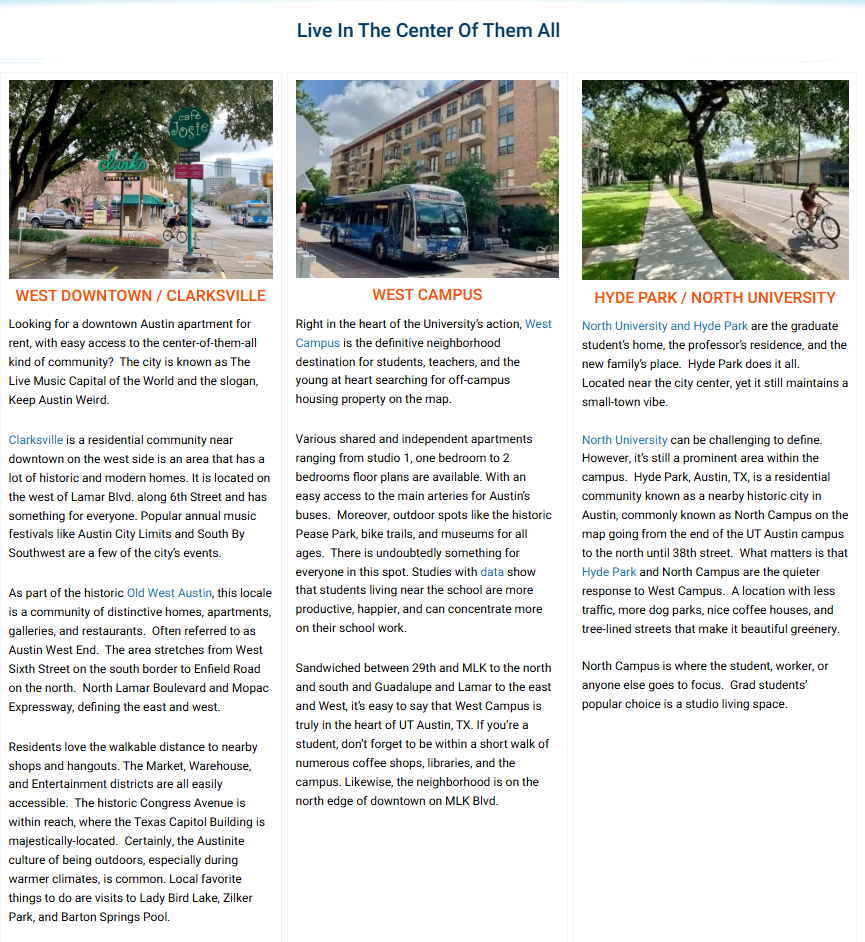
Clarksville / West Downtown parent location page used as project evidence.
Before
The page repeated broad city-wide phrases ('Austin apartment for rent', 'Austin West End') alongside neighborhood mentions. The copy blended general tourism trivia with commercial listing text, creating topical overlap with the homepage.
What Was Changed
Repetition of broad city-wide phrases was reduced. The content was refocused strictly around neighborhood-level residential intent for Clarksville and West Downtown, while direct link pathways to child properties (6th Street West, Waterston Studios) were maintained.
Objective: Kept the parent page focused on neighborhood-level intent without diluting the primary homepage.
Page Role: Child Property Pages
Example 02Diplomat & Envoy West Campus
Child property pages for Diplomat and Envoy West Campus used as project evidence.
Before
Property pages relied heavily on generic campus descriptors and broad 'West Campus apartments' keywords. On-page headings and metadata lacked distinct property differentiation, putting sibling buildings at risk of competing for identical queries.
What Was Changed
The primary focus was shifted directly to building-specific student housing intent (such as 'Diplomat West Campus Apartments' and 'Envoy College Apartments') and distinct unit specifications like 425 sq ft floor plans. Broad neighborhood terms were kept only as secondary context.
Objective: Strengthened building-level intent while allowing the parent location page to target the broader sector.
Page Role: Trust & Feedback Pages
Example 03Resident Review Pages
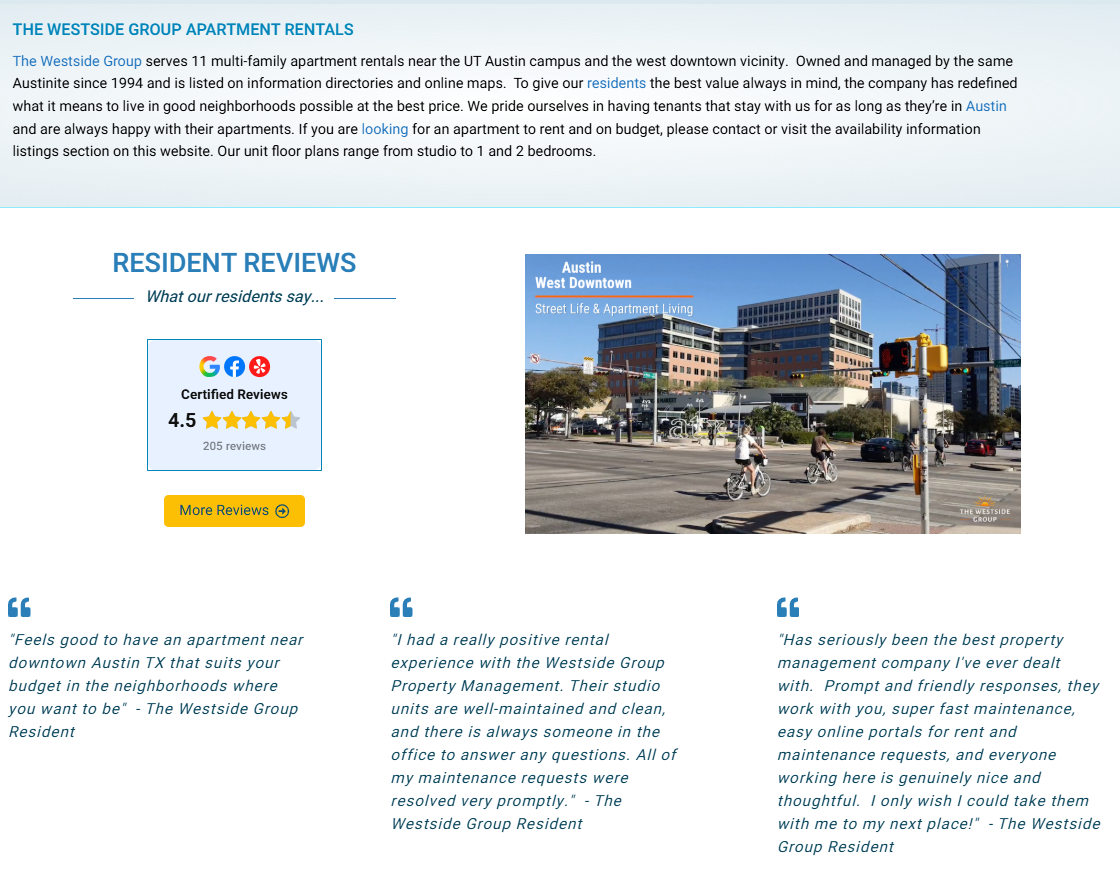
Certified reviews module and resident quote cards displaying 4.5 star rating from 205 certified reviews.
Before
Individual review pages included prominent commercial rental keyphrases in H1 tags, sometimes formatted with raw hyperlink HTML tags. This caused review pages to compete directly against commercial property listing pages.
What Was Changed
Review pages were restricted to resident testimonials, ratings, and reputation search intent. Raw link markup was cleaned from headings, and commercial rental terms were removed to protect the main listing pages.
Objective: Separated resident review intent from commercial leasing intent so each page serves one distinct user goal.
Visual Evidence
Selected Project Evidence
Visual records from the website analysis showing original layouts, navigation structure, and on-page review components. Click any block to inspect full details:
Homepage
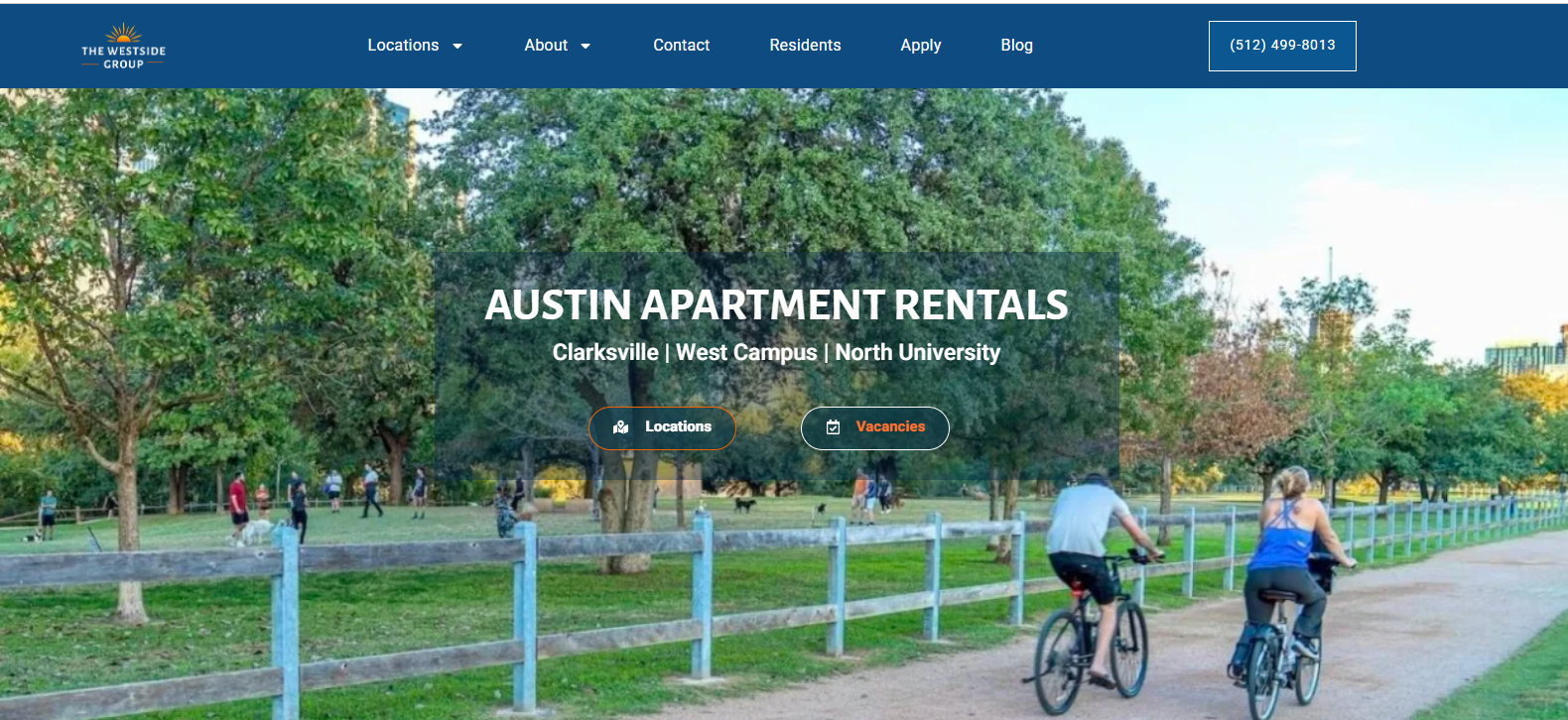
Original Homepage Header & Navigation
Original homepage hero displaying broad category heading 'AUSTIN APARTMENT RENTALS' with sub-neighborhood anchors, phone contact, and external vacancy links.
Location Pages
Neighborhood Parent Cards
Neighborhood parent cards for West Downtown/Clarksville, West Campus, and Hyde Park before keyword refinement and intent separation.
Property Pages
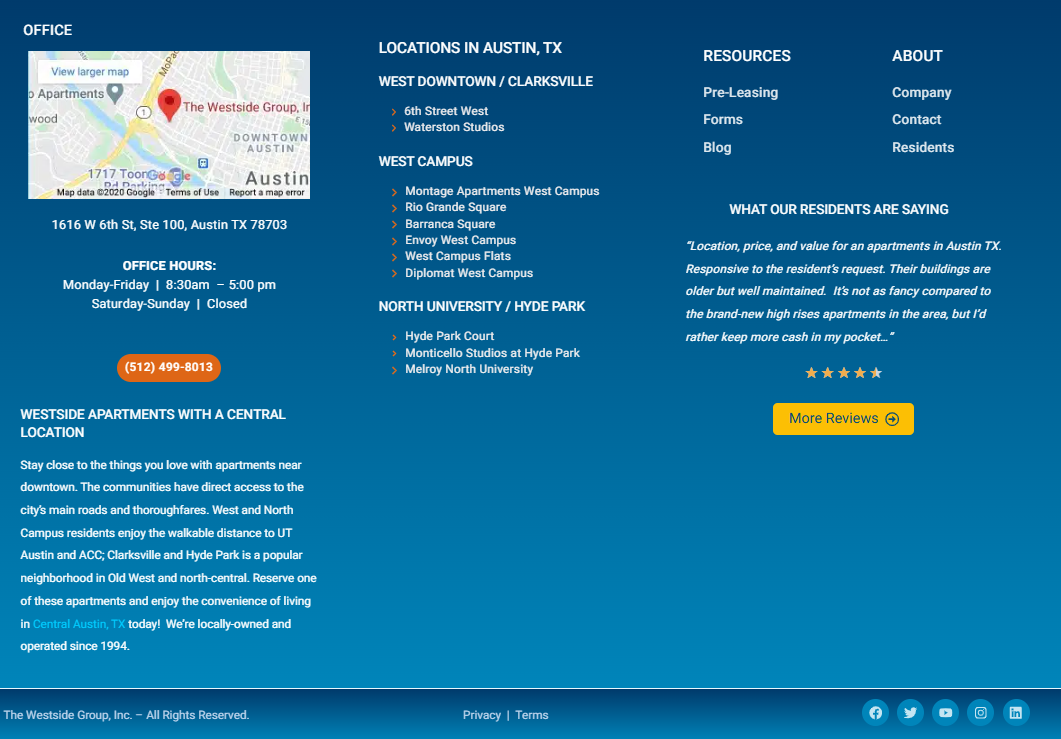
Property Hierarchy in Site Footer
Footer structure documenting the 11 residential communities organized beneath their respective sub-market headings.
Review Pages
Resident Reviews Section
Certified reviews module and resident quote cards displaying 4.5 star rating from 205 certified reviews before testimonial formatting adjustments.
On-Page Content
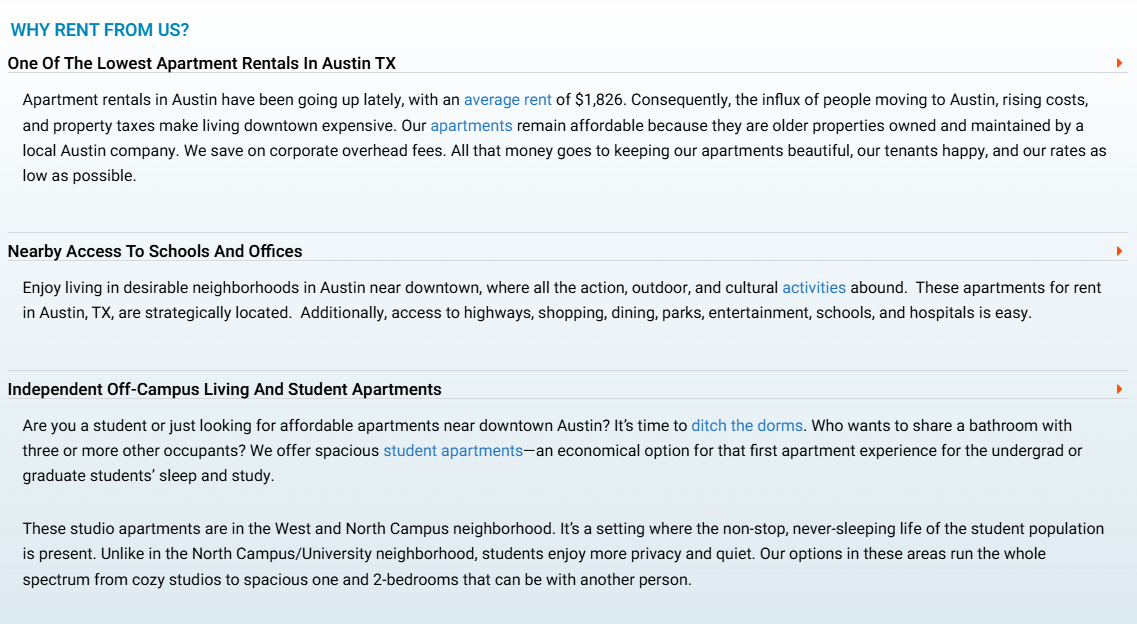
Informational Accordion Section
Informational accordion addressing local Austin rent context and off-campus housing benefits for student renters.
Project Identity

The Westside Group Project Emblem
Official brand asset used during the website structure, SEO, and presentation review engagement.
Keyword Strategy
Keeping Different Pages From Competing With Each Other
Keyword cannibalization occurs when multiple URLs on a website target identical or near-identical search queries. When this happens, search engines split ranking signals across the pages, often causing both to underperform.
In the Westside Group website structure, three specific guardrails were applied to keep search roles distinct:
1Location Pages vs. Individual Properties
A parent neighborhood page (such as West Campus) targets renters looking for general off-campus student housing options in that sector. An individual property page (such as Diplomat West Campus) focuses strictly on that community, its amenities, and floor plans. The property page does not attempt to compete with the parent hub for general area terms.
2Commercial Property Pages vs. Review Pages
A rental listing page exists to encourage inquiries and tours. A review page exists to document resident experiences and ratings. Heading tags and metadata on review pages were adjusted so that broad rental keywords were removed, keeping them focused on reputation and feedback queries.
3Blog Content vs. Commercial Pages
Informational articles (such as guides to student life or off-campus checklists) answer practical questions for prospective renters. Rather than attempting to rank for core commercial terms like 'apartments near UT Austin', they provide helpful answers and link naturally into the relevant property pages.
Engineering Judgement
What I Chose Not to Change
An important part of responsible SEO implementation is knowing what not to touch. Forcing changes simply to satisfy automated plugin recommendations can create unnecessary risks on an established website.
Preserved Existing URL Slugs
Established URLs carry historical search signals and backlinks. Changing slugs to match ideal keyword strings would have introduced redirect chains and risk without measurable benefit.
Avoided Keyword Stuffed Copy
Automated SEO checks often recommend repeating keyphrases multiple times. Text was kept natural and conversational rather than forcing unnatural repetition to turn plugin checks green.
No Duplicate Address Blocks
Physical address and office contact details were already clearly displayed in the header and footer. Repeating identical address blocks inside body text was avoided.
No Commercial Terms on Reviews
Review pages were kept simple and focused on resident feedback rather than attempting to force rental keywords where they did not belong.
SEO tools provide helpful checklists, but they do not replace practical judgement about website history and user experience.
Asset Performance
Reducing Image Weight Without Losing Page Context
Property websites rely heavily on visual assets to showcase apartments, amenities, and floor plans. On westsidegroup.com, numerous original PNG and JPG files were several megabytes in size, contributing to heavy page weight and slower loading for mobile visitors.
The Documented Image Workflow
- Format Conversion: Legacy PNG and JPG files were converted to modern WebP format.
- Metadata Review: Alt text was written to describe the image accurately for accessibility rather than stuffing target keywords.
- Blog Asset Inclusion: 14 blog posts were included in the image workflow to ensure consistent asset handling across the site.
Documented image optimization example from the Westside Group project.
427Images In WorkflowRecorded across property & blog assets
299Completed at StageConverted and metadata reviewed
< 200 KBTarget WeightKept low where practical via WebP
Technical SEO
Technical SEO Work Behind the Pages
Behind the visible content, several foundational technical files and configurations were reviewed and updated to support cleaner search engine indexing:
Tag Archive Cleanup (107 Pages)
Over 90 tag archive pages were indexed on the domain (e.g. /tag/bats/, /tag/cool/). On staging, 107 tag archive pages were configured to noindex to prevent low-value pages from diluting crawl budget.
Robots.txt Directives
Reviewed crawl directives to ensure search engine spiders can access important CSS, JavaScript, and property media while preventing unnecessary indexing of admin paths.
XML Sitemap Validation
Verified that the XML sitemap index cleanly references live parent locations, child property pages, and active blog posts while excluding noindexed archive URLs.
llms.txt Preparation
Prepared structured plain-text llms.txt context to support accurate entity understanding and property detail retrieval in generative AI search engines.
Schema Markup Review
Reviewed existing structured data to verify that appropriate types (such as RealEstateListing and ApartmentComplex) support rich search presentations.
Staging Speed Settings
Reviewed cache rules and asset handling settings within WP Rocket on staging to ensure fast delivery across device viewports.
A Note on Plugin ChecksGreen indicators inside tools like Yoast are implementation checks. They verify on-page mechanics such as title length, heading hierarchy, keyphrase presence, and meta descriptions. They are not proof of search engine rankings, lead volume, or business revenue. Throughout this case study, technical scores are treated as quality assurance measures, not business outcomes.
Project Deliverables
Verified Project Outcomes
In keeping with strict factual reporting, the deliverables documented below represent verified operational changes completed during the project:
427Images DocumentedIncluded in the image workflow
107Tag Archives CleanedConfigured to noindex on staging
14Blog Articles LinkedConnected to commercial properties
Verified Deliverables
Page intent mapped across 5 core website tiers (homepage, location, property, review, blog).
Keyword overlap reduced between parent neighborhood pages and 11 child apartment listings.
Review pages restructured around reputation and resident feedback queries without commercial cannibalization.
Internal linking pathways built connecting informational blog posts to relevant commercial properties.
Meta descriptions, SEO titles, Open Graph tags, and Twitter metadata completed across pages.
High-resolution media assets converted to WebP and compressed toward roughly 200 KB where practical.
107 low-value tag archive pages set to noindex on staging to protect search engine crawl budget.
Technical crawling files (robots.txt, XML sitemap, llms.txt) reviewed and prepared.
Client Feedback
Appreciation from The Westside Group
During the project, the Westside Group team shared direct feedback on the work after reviewing the location-page changes.
“I’m pleased with your work, and I will add a bonus to the final payment.”
Westside AdminThe Westside Group
Project feedback shared by The Westside Group during the location-page work.
Professional Responsibility
My Role
Hussain Abdul Rauf Jatoi
Business Growth Systems Architect
I worked across the SEO and website structure, including on-page SEO, page-intent mapping, internal linking, images, metadata, review-page optimization, location/property-page optimization, content support, and technical SEO preparation.
Direct Responsibilities:
Search Intent Architecture
On-Page Content & Headers
Internal Linking Mesh
Image Optimization Workflow
Technical Hygiene on Staging
Methodology Connection
How This Fits the JATOI Growth Framework
This project directly exercised three layers of the JATOI Growth Framework:
Layer 01
Visibility
Search intent mapping, metadata, keyword cannibalization control, and crawl structure.
Layer 03
Conversion
Clearer renter pathways to vacancies, tour requests, and online application forms.
Layer 05
Operations
Structured implementation workflow across staging, asset management, and technical documentation.
Questions & Clarity
Frequently Asked Questions
Direct answers regarding the Westside Group SEO and website structure engagement.
The Westside Group is an Austin, Texas apartment rental and property management company. The website presents 11 multi-family residential communities located in central Austin neighborhoods such as West Campus, North University, Hyde Park, and Clarksville.
The website contained several page types that were targeting overlapping keyword themes. Without clear intent boundaries, the homepage, parent neighborhood pages, property pages, and review pages risked competing against each other in organic search.
Parent location pages were aligned around neighborhood-level search intent such as West Campus or Clarksville apartments. Individual property pages were assigned specific property-name intent, unit specifications, and floor plan details, with links pointing upward to the parent area and downward to vacancy inquiries.
Review pages were isolated so they focused exclusively on resident feedback and property review terms. Broad rental and neighborhood transaction terms were removed from review headings to prevent them from diluting the primary commercial property pages.
Heavy PNG and JPG assets were converted to modern WebP format and compressed. Many multi-megabyte originals were reduced below roughly 200 KB where practical. Descriptive alt text, titles, and captions were reviewed for accessibility and accurate context rather than stuffed with keywords.
No. The engagement focused on targeted SEO improvements, page architecture refinements, internal linking pathways, and technical foundations on staging, while preserving the established website framework and valuable existing content.
The technical work included a review of robots.txt directives, XML sitemap validation, llms.txt preparation, noindexing 107 thin tag archive pages on staging to protect crawl budget, schema markup verification, and staging speed checks with WP Rocket.
No. Existing URL slugs were deliberately preserved. Changing established slugs would have introduced 301 redirection chains and unnecessary risk to historical search standing.
This case study focuses on documented implementation work. No private analytics, revenue, lead data, or unsupported performance claims are published here.
Explore More Work
Review additional documented implementations or examine the five core layers of the JATOI Growth Framework.